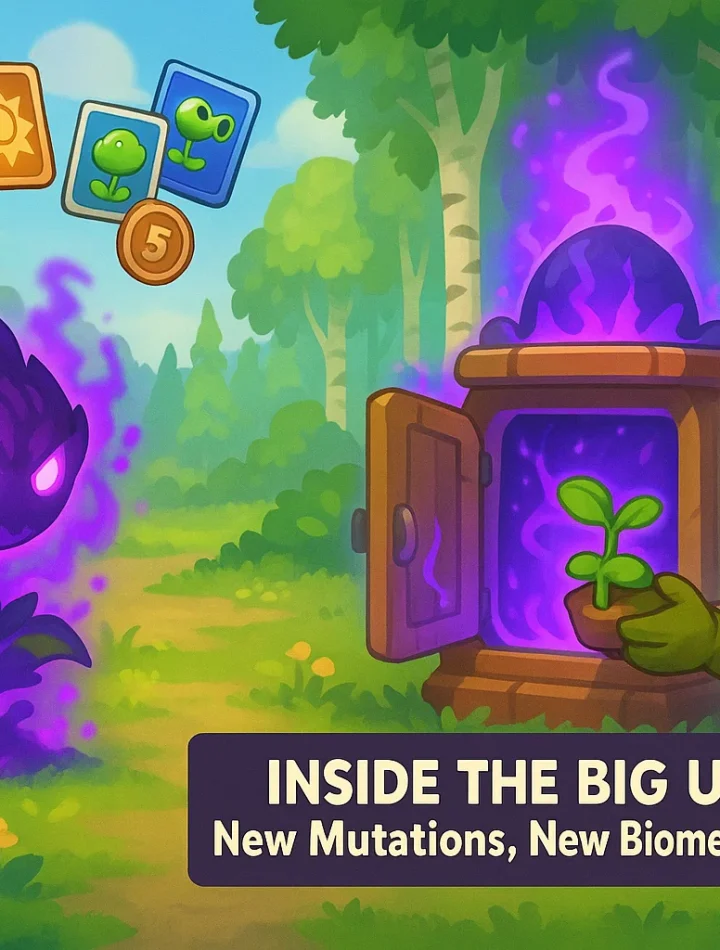
The newest update to Plants Versus Brainrots is easily one of the biggest overhauls the game has seen in months. From a full Season 1 Pass to reworked systems, new biomes, expanded card collections, and even quality-of-life settings, this patch adds depth without overwhelming younger players. After spending time exploring everything, here’s a clean breakdown of what actually matters and how players can take advantage of the new features.
Season 1 Pass: How It Works and What’s Worth Grinding For
The star of the update is the new Season 1 Pass. Structurally, it plays a lot like a traditional battle pass: a free track available to all players, and a premium track unlocked with Robux. Progress comes from completing quests, each offering a few XP based on difficulty. Even simple tasks like using machines or gears contribute to pass progression, so it feels steady rather than grindy.
One of the most notable changes is the introduction of Season Tokens—earned through the pass and spent in a dedicated shop. Items like premium water buckets, witch potions, or the new Season 1 egg give players more flexibility in how they progress. For newer players or anyone tight on time, this system makes planning a lot easier. There’s also a growing economy around season items, especially among players looking to buy Plants Vs Brainrots items through external marketplaces like U4GM, though as always, make sure you stick to safe and trusted sources.
A New Era for Card Management
One of the more underrated improvements is the remodeled card system. The old card-merger machine is gone, replaced with a clean in-menu UI that lets you merge and delete cards on the fly. With the limit capped at a thousand cards, this feature is more of a lifesaver than it looks. Considering the massive expansion of card packs—many featuring brand-new collections—players will need this extra control.
The update also introduces new fusion possibilities, including a fun collector-style mix of the “Dub” and “L” cards. It’s not meant for earning big money, but it’s the kind of quirky collectible that players enjoy flexing.
The Corrupted Plant Pantry: A Major Shift in Mutations
The old plant pantry system has been replaced by the Corrupted Plant Pantry, and it’s arguably the most impactful change for gameplay. Instead of leveling a plant to earn boosts, players hand it over to a small hamster NPC that applies a corrupted mutation after a short cooldown.
The corrupted mutation boosts mission health by ten times, which is huge—especially for players who struggled with specific missions in the past. If you’re planning runs through high-difficulty missions or prepping for story progression, corrupted plants can carry you through situations that previously required rare mutations like Frozen. Just make sure you don’t sacrifice a plant that already has a valuable mutation; the system overwrites whatever the plant had before.
This update also indirectly helps players get more value out of plants with no mutation at all. Now, even a basic plant can be thrown into the pantry and later used in the main mutation machine. That flexibility opens new options for lineup building and experimenting with team comps.
The Birch Forest Biome: A New Goal for Story Players
For players invested in the story content, the Birch Forest Biome is the next big milestone. To unlock it, you’ll need to clear 25 Cherry Grove missions. Before this update, that requirement felt pretty punishing—but the corrupted mutation and the Bloom Ascendant card combo finally make the grind manageable.
Most players wait until Bloom Ascendant reaches 1000 stacks before triggering a mission. When combined with corrupted plants, this gives a powerful damage buff that lasts throughout the mission. If you’ve been stuck in story progression for weeks, this update might be your turning point.
For players who prefer to buy Plants Vs Brainrots items cheap rather than grind every single component manually, there’s a noticeable uptick in demand for mission-oriented plants this season. Just make sure to spread your resources wisely—you’ll need a full team of strong plants as the story gets harder.
Small Improvements That Make a Big Difference
Several quality-of-life additions quietly polish the game. The new plant scale setting might seem minor, but being able to shrink your plants visually makes garden organization so much easier. Instead of navigating a dense jungle of oversized leaves, you can finally see your pathways and decorate without constant frustration.
Inventory expansions from the two new rebirths are another huge improvement. With 25 extra slots per rebirth, players can unlock up to 50 more inventory spaces. For anyone who constantly hits max capacity—pretty much all of us—this change is extremely welcome.
There are also new seeds, collectible items, and tweaks sprinkled throughout the update. Nothing game-breaking alone, but together they round out the patch and give players more to experiment with.
This update packs a surprising amount of content without losing the charm of Plants Versus Brainrots. The Season 1 Pass gives players a clear sense of progression, the corrupted mutation system completely reshapes mission strategy, and the new biome offers longer-term goals. With cleaner card controls and better inventory options, the game just feels smoother overall. Whether you’re here for the grind, the collection aspect, or the story missions, there’s something in this patch for every type of player.